
Essential Qigong Exercises for Self-Healing
Camilo Sanchez
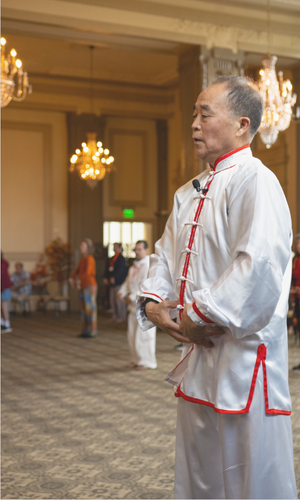
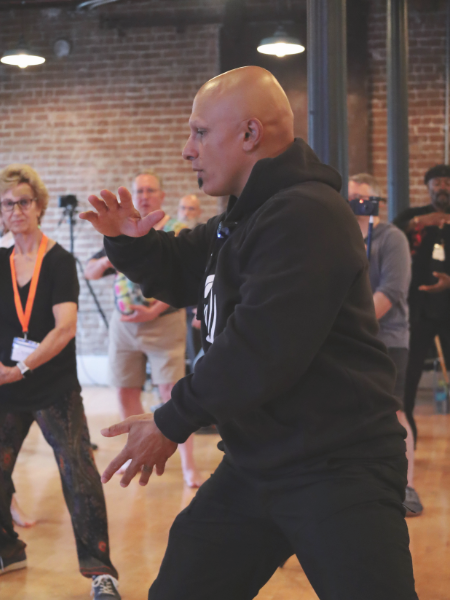
In this class Sifu Camilo Sanchez, L. Ac, MAOM, will introduce the three main components of self-healing, describe the key features of each phase of healing, and teach eight essential Qigong exercises to clear the energy channels, strengthen internal Qi, balance life energy, and support self-healing.
Benefits
• Discover the three main components of self-healing.
• Recognize the key features of each phase of healing.
• Clear blockages of the energy channels that cause chronic disease.
• Relieve chronic joint pain, stiffness of the muscles, congestion, inflammation, and toxins.
• Strengthen Qi to increase your energy level, boost your immune system, and strengthen your innate resistance to disease.
• Balance your Yin and Yang energies to optimize the physiologic function of the internal organs, harmonize the nervous system, and support brain integration.
• Learn a set of eight essential Qigong exercises to support self-healing.
What to expect
• Clear explanation for each phase of self-healing.
• Easy to follow instructions and guidelines for each exercise.
• Main benefits for each exercise.
• Handouts to support your learning.
• An essential Qigong practice for self-healing.
Phase 1: Clearing Blockages to Healing
Principle
The body knows how to function and maintain homeostasis, a steady state of physiology. It has the natural capacity to heal and restore optimal health if provided with the right conditions. In Qigong, this innate energy and intelligence is called Qi.
In fact, most chronic health issues arise from interference with this innate intelligence and the body’s natural state of function. The body’s natural state of function is characterized by the alternation of two phases of activity, namely Yin and Yang phases. This is called ‘homeostasis, a steady state of function, not too high or too low. When out of phase or balance, the body gets ‘stuck’ in one phase too long, which leads to dysfunction and disease.
Various factors such as poor nutrition, exposure to environmental toxins, chronic stress, radiation, synthetic medications, overexertion, and sedentary life styles give rise to toxicities that over time result in nutritional deficiencies. Toxicity interferes with the transit of nutrients into the cells and the disposal of cellular waste out of the body and it also blocks specific metabolic pathways. In turn, nutritional deficiencies deprive the cells of the essential elements it needs for optimal functioning and performance.
Therefore, the first step in any healing modality is to identify and clear anything that can block healing.
Main blockages to healing
Blockages to health can be structural, metabolic (biochemical), emotional, environmental (toxins), and infectious.
• Structural: Traumas, injuries, repetitive strain, occupational stresses, inflammatory processes, degenerative conditions.
• Metabolic: Poor nutrition, digestion, gut health, liver function, pancreas, physiologic functions of the Zang and Fu organs, metabolism, chronic inflammation.
• Emotional: Unresolved emotional memories, traumatic events, chronic stress, patterns of emotional response, perception of self and reality, related to the five Zang (Yin) organs.
• Environmental: Exposure to toxins, air, water, soil, food items, medications, cosmetics, radiation.
• Infectious: Chronic viral, bacterial, fungal, and parasitical infections.
Qigong strategies to clear the channels
• Identify and clear blockages to healing
• Resolve chronic inflammation (diet, digestion, gut, liver, pancreas, stress)
• Clearing the channels
• Dynamic Qigong exercises (Dong Gong)
Phase 2: Strengthening Qi
Sources of Qi
Prenatal Qi: Yuan Qi (source Qi or original Qi), inherited constitution from parents, kidneys, reproductive system, life essence (Jing), hormonal production, stem cells.
Postnatal Qi: Gu Qi (food Qi), stomach and spleen (digestion of food and assimilation of nutrients), Qing Qi (clear Qi), lungs (breathing and oxygenation), Gu Qi + Qing Qi = Ying Qi (nutritive Qi).
Five main functions of Qi
• Activation of physiologic functions
• Circulation
• Temperature regulation
• Defense (immunity)
• Tonicity (proper tissue tone)
Qigong strategies to strengthen Qi
• Quiescence Qigong (stationary Qigong stances- Jing Gong)
• Qigong for the lower Dantian (kidneys, life gate-ming men, lower trunk)
• Qigong for the middle Dantian (abdomen, stomach, spleen, digestive system, lungs, chest, breathing)
• Reduce sensory input and impressions
• Cultivate tranquility
• Meditation
Phase 3: Balancing Yin and Yang energies
Balancing Yin and Yang energies is a fundamental requirement for maintaining a steady state of function and optimal health.
Optimal physiologic function results from the alternation of two opposite and complimentary phases of activity, namely Yin and Yang phases.
Yin phases refer to physiologic functions that support energy assimilation, conservation, energy storage, lower oxidation, built up of tissues, repair of tissues, regeneration, and decreased metabolic activity. Yang phases involve increased oxidation, energy expenditure, breakdown of tissues, energy release and circulation, and increased metabolic activity.
Examples of Yin-Yang physiologic phases are numerous and include the following.
• Anabolism and catabolism
• Parasympathetic and sympathetic
• Alkaline and acid
• Reduction and oxidation
• Ketogenic and glucogenic
• Inhibition and activation
Essential Qigong Exercises for Self-Healing
Qigong exercises to clear the channels
Loosening and warm up exercises
• Turn neck
• Shoulder rolls
• Flying phoenix
• Rotate waist
• Arching and bowing the spine
• Spiraling Qi
• Rub and rotate knees
Clearing the channels
1. Exhaling with the Hu sound
2. Rebounding Qi
3. Clearing the Qi field
4. Activating the Yin and Yang channels
Qigong exercises to strengthen Qi
5. Gathering nature Qi
6. Gathering Qi to the middle and the lower Dantians
7. Opening the life gate (ming men)
8. Hugging the balloon
Balancing Yin and Yang energies
9. Opening and closing Qi (Kai He)
10. Rotating the sun and the moon
11. Floating the duckweed on the water
Integrating Qi
12. Uniting three centers into one entity




.svg)